 Terres Mêlées /// Galerie Melanie Rio Fluency, Nantes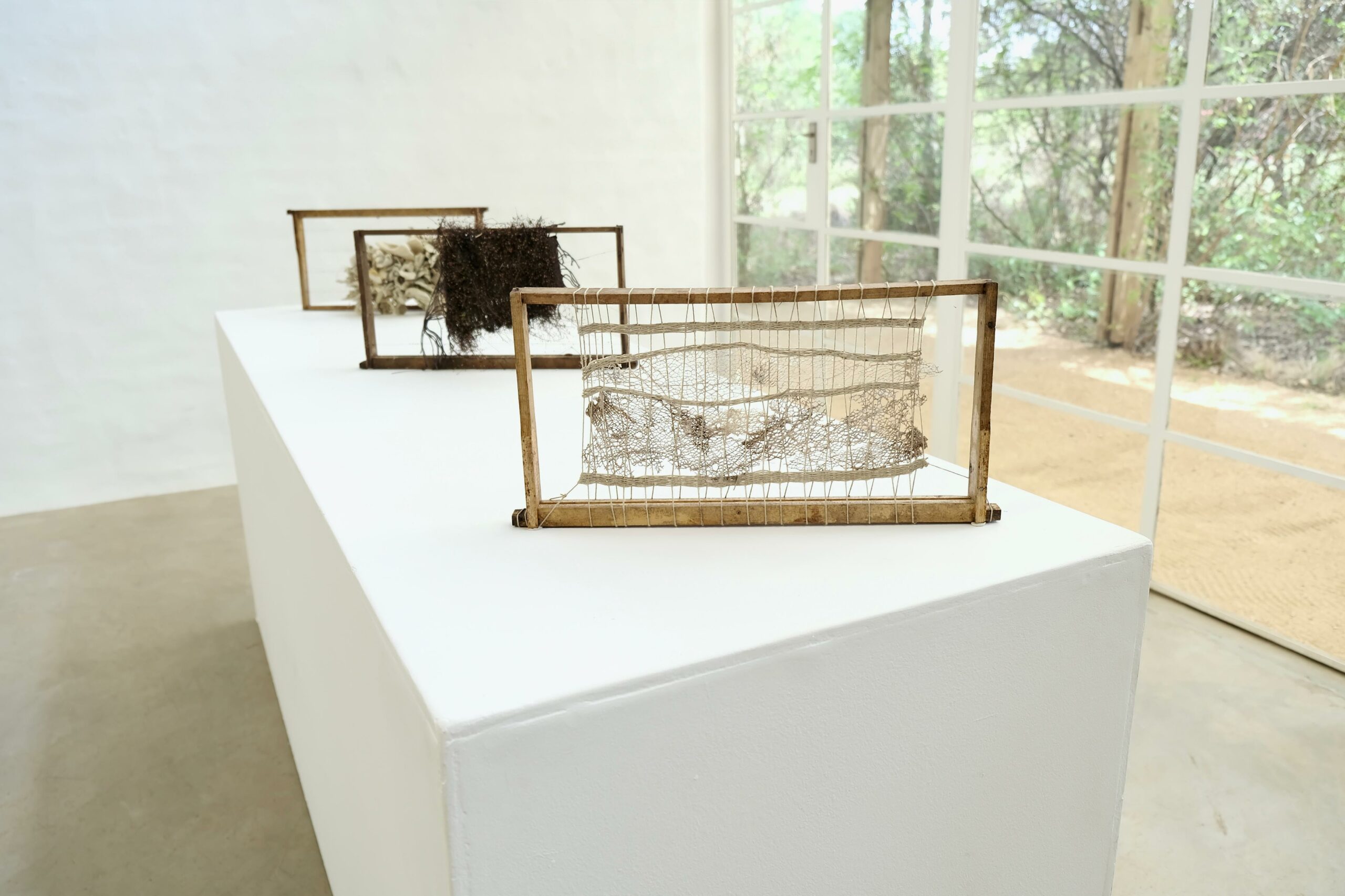
Still Wild /// Villa-Legodi x NIROX Foundation x Institut français d’Afrique du Sud
Voici quelques mots que j’ai écrits :
« Our residency in Witklipfontein is now coming to an end.
At first arriving here, I felt rather strangely, as though I had entered another kind of confinement. A fenced reserve, surrounded by an extraordinary landscape, with giraffes, zebras and antelopes, an idyllic place, certainly, but nevertheless a contained territory. I was surrounded by thorns and cacti that caught at me, scratched me, pierced me. They felt almost like a kind of vegetal barbed wire, preventing me from entering the landscape.
Entering a territory is essential to my way of working. I need to walk through a place in order to understand it. To observe, to collect, to touch, to feel what is happening around me. So, at first, I felt almost as though I were on an island, separated from the landscape by this wall of thorns.
It took me six weeks to become familiar with the place, to understand that what initially appeared hostile could reveal itself as gentle, if ever I changed the way I looked at it. Finally, I did not need to make long journeys. The journey took place inside me. It happened within a few meters of the house and around the studio, within a landscape whose very buildings are made from raw clay, extracted from a small vein just below us.
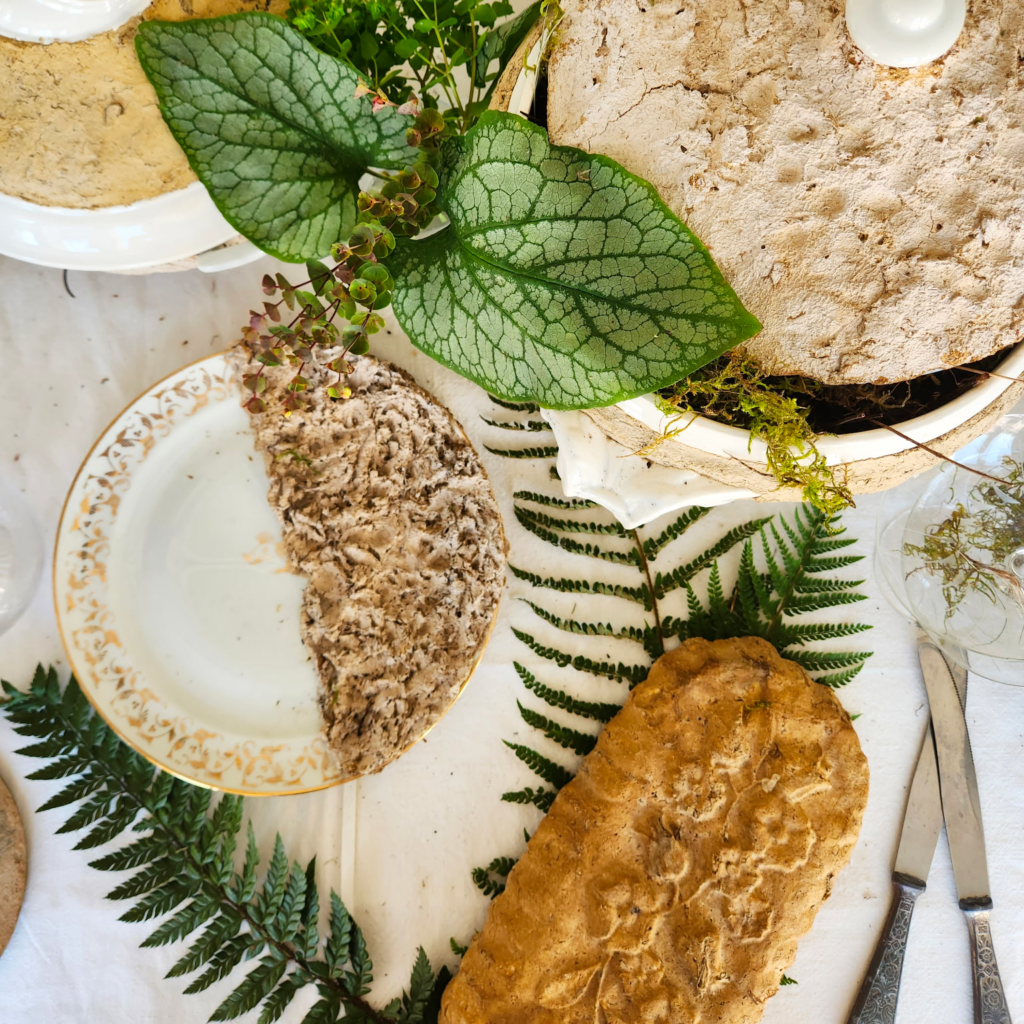
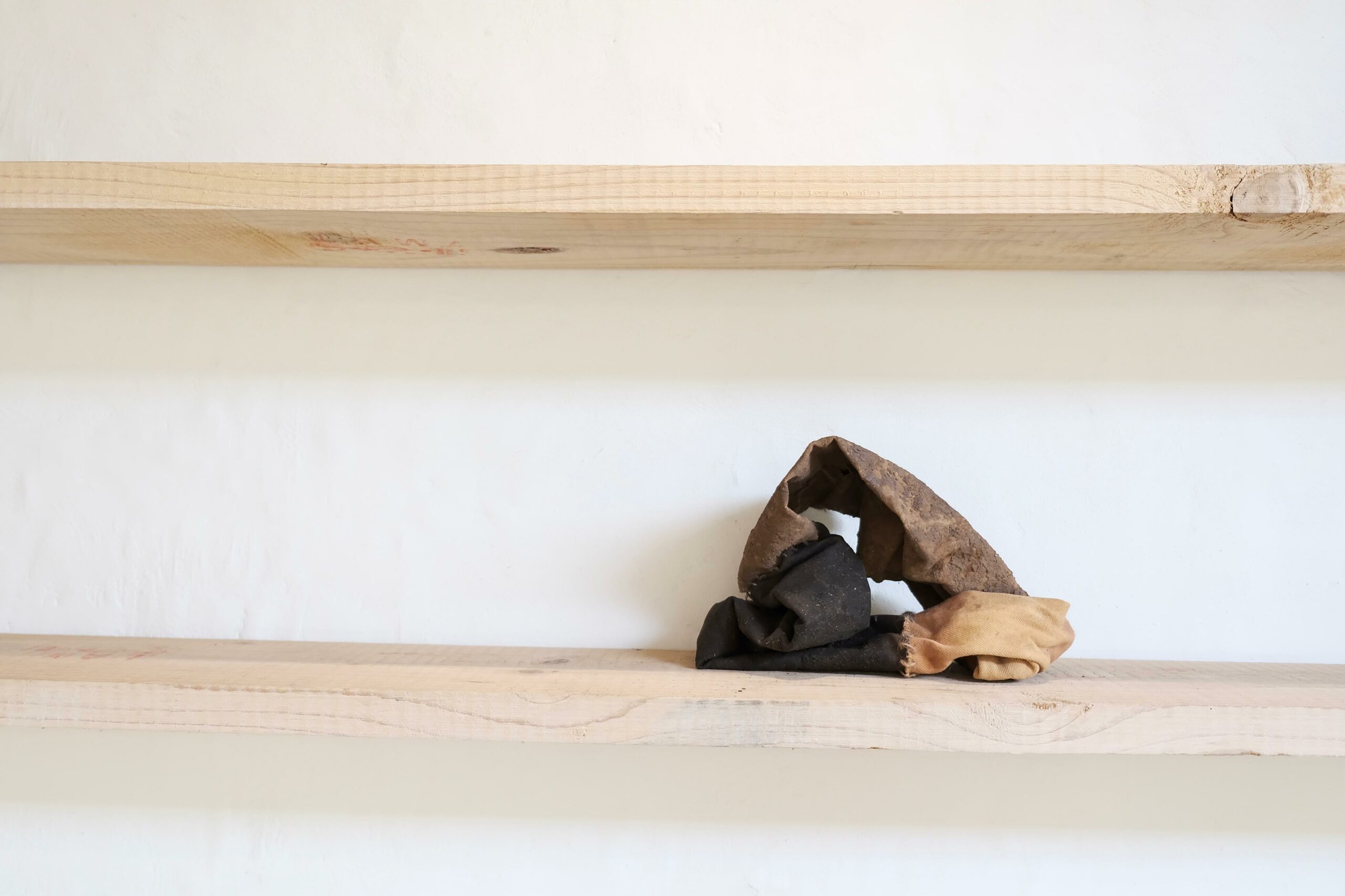
As often happens during my residencies, I wanted to work with what I found beneath my feet, because this is the world that I feel attracted to: the world we constantly walk over without really seeing it. This thin crust of the earth, beneath and above, contains so many stories, materials and traces still unfolded.
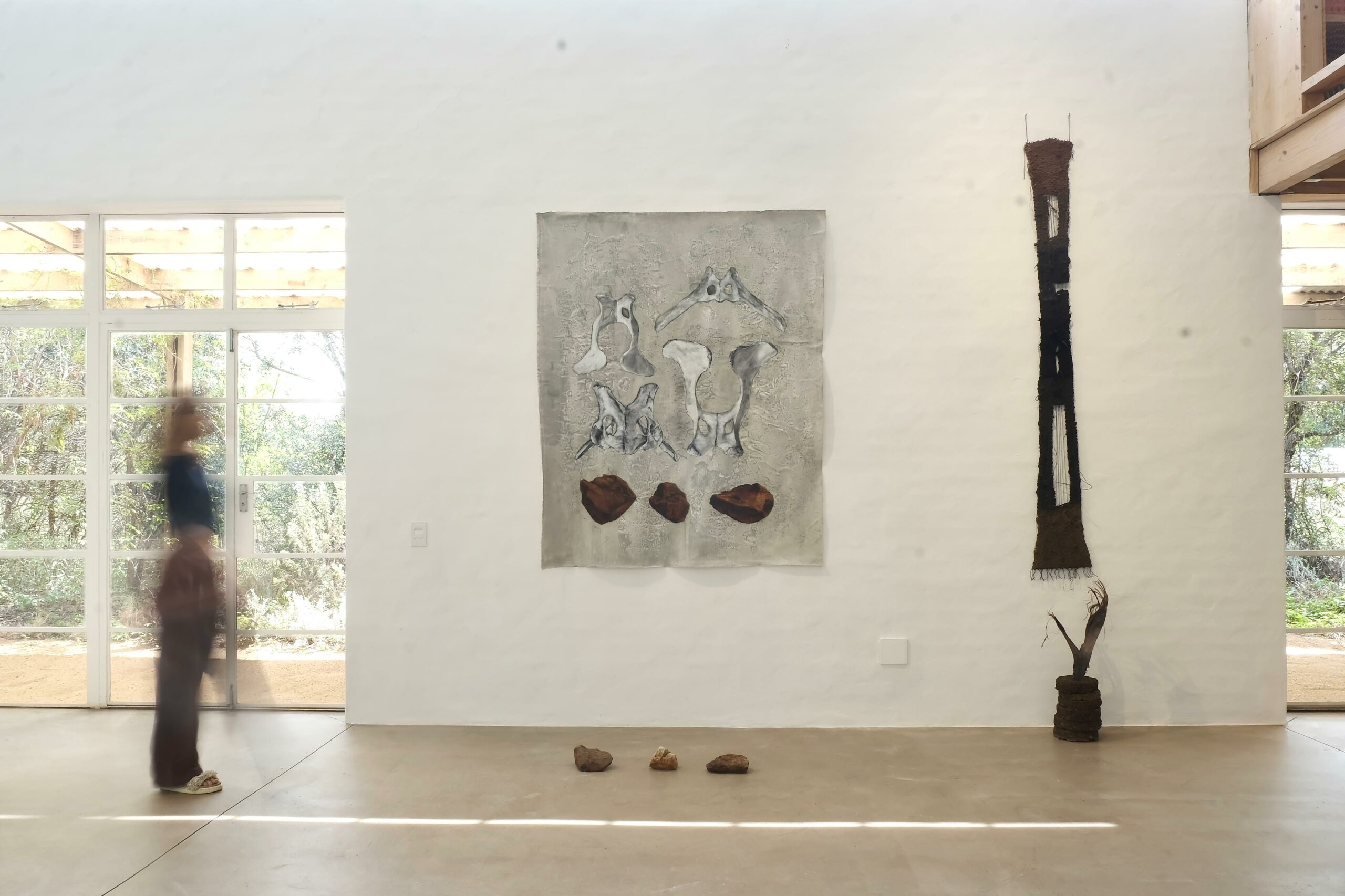
In Witklipfontein I discovered bones I had never seen before. So huge, extraordinarily beautiful, bleached by the sun, belonging to the wild animals that live in this landscape. Giraffe bones, but also stones, dry grasses, fragments of earth and dung.
I began weaving small assemblages with these bones and sticky grasses from the savannah and herbs from the mountains. I didn’t feel anything macabre about these bones. They were just fragments of the landscape that could speak of the relationship between life, death and time.
I really enjoyed arranging them, moving them, playing and looking at them from different angles.
But then a practical question: how could I possibly take all of this with me?
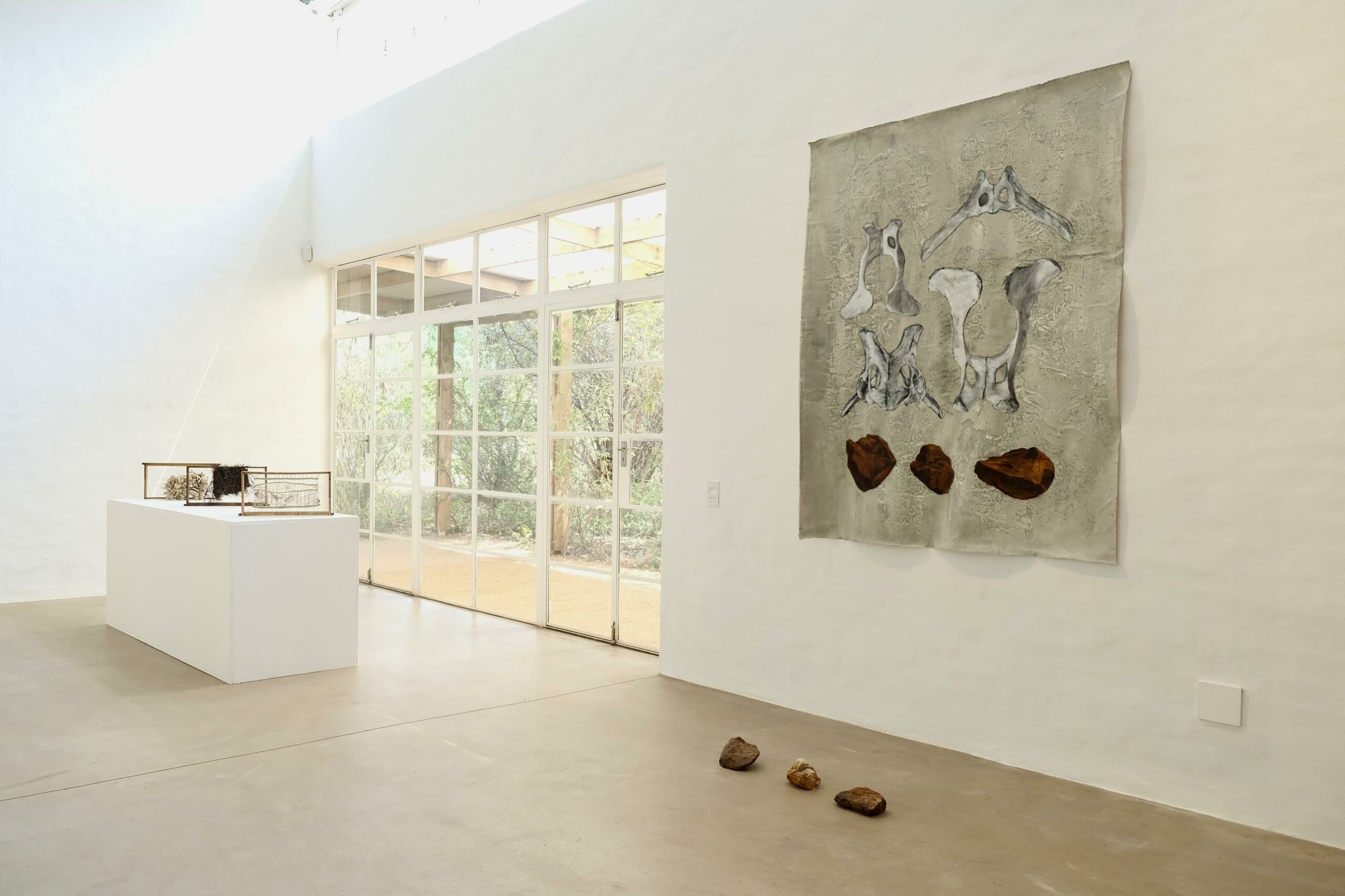
I started to draw the assemblages in charcoal that I make myself in the fireplace.
Drawing gives me the possibility to shift the scale completely. A skull can become as small as a tooth. And a tooth can become a whole landscape.
Through this transformation, bone, stone, grass and landscape began to occupy the same visual and conceptual space.
The bone is a kind of mineral memory of the animal. Its representation is not about death or mourning. It is about the beauty of what remains, its spirit, the persistence of a presence after the body has disappeared.
Gradually, the bush became an inner landscape: a space of silence and contemplation of immensity and memory. The bone is the body of that immensity, a physical fragment carrying the memory of the landscape.
When a fragment of the ground moves from the drawing onto the canvas, it’s a kind of archaeology of the wild.
Stones carry something different, but something closely related to the bones. They are fragments of the mountain, pieces of its mineral body. They hold another scale of time. And perhaps this is where everything comes together.
The animal dies, and its bones remain.
The vegetation dries. The earth remains.
Erosion moves through the landscape. The rock remains.
Each material carries its own temporality, its own rhythm of disappearance and persistence. Yet all of these times are held within the same landscape.
Witklipfontein is a place where these different temporalities coexist: the time of the living, the time of death, the time of vegetation, the time of earth and the time of stone.
A landscape that does not simply tell us what is here today, but records everything that was here before us, everything that will remain after we are gone. »
Terres Mêlées /// Galerie Melanie Rio Fluency, Nantes